

Match bookings to run type, pet size, care needs, arrival dates, and departure timing so available capacity is easier to sell and protect each day.
Fill Runs Cleanly
Keep vaccine dates, illness notes, medications, and health flags visible before check-in so staff can catch risk before pets enter the floor.
Control Vaccines
Send confirmations, photo updates, report cards, illness notices, and next steps so families feel informed while their pets are away from home.
Protect Parent Trust
Record bites, injuries, vomiting, behavior issues, witness notes, follow-up, and owner contact so serious events do not live in memory or texts.
Clean Incident Logs


Systems Customized to Meet Your Needs
Our systems are developed around the way reservations, pets, staff, care records, and parent trust actually work together:
Marketing & Visibility - Clarify boarding offers, daycare options, tours, vaccination rules, reviews, parent updates, and booking paths.
Lead Capture & Intake - Capture pet, owner, stay dates, run type, vaccines, meds, behavior, emergency contacts, and care notes.
Reservation & Payment Flow - Manage deposits, add-ons, package sales, invoices, refunds, waitlists, check-in, and check-out status.
Capacity & Staff Flow - Match reservations to runs, rooms, daycare groups, staff coverage, cleaning windows, and care needs.
Care Floor Workflow - Give staff feeding, medication, cleaning, playgroup, update, incident, and closeout tasks by pet and shift.
Parent Communication - Send confirmations, reminders, report cards, photo updates, illness notices, invoices, and pickup instructions.
Health Records & Retention - Track vaccines, meds, illnesses, behavior, incidents, preferences, repeat stays, rebooking, and seasonal demand.
Reviews & Reporting - Track capacity, occupancy, add-ons, incidents, staffing, vaccine flags, parent updates, reviews, and revenue leakage.
Top Ten Points of Failure for Boarding / Kennel Systems
1. Capacity logic that hides or loses bookings
Managers indicate that bad booking logic can tell customers the facility is full when it is not, while duplicate records or missing reservations damage trust close to travel dates. Capacity has to reflect real runs, pets, and dates.
2. Vaccination and health-record gaps
Operators need vaccine dates, health notes, flea and tick procedures, medication details, and illness flags available before check-in. When records are handled loosely, the front desk and care floor both inherit preventable risk.
3. Outbreak screening and response weakness
Kennel managers are operating in a setting where respiratory illness can spread quickly. Systems need screening notes, isolation steps, cleaning tasks, parent notices, and follow-up so illness response does not depend on memory.
4. Incident, bite, and playgroup documentation gaps
Owners and managers report that supervision, behavior, injuries, and bite reporting become legal and reputation problems when workflows are weak. Incident records need witness notes, photos, follow-up, and owner contact attached.
5. Missing inspection-ready emergency information
Managers indicate that printed run cards and emergency contacts still matter, especially in kennel areas with weak internet access. Staff and inspectors need owner details, medical notes, and emergency procedures available fast.
6. Staff training and shift handoff drift
Operators want more systematic onboarding because care quality depends on handlers following the same feeding, medication, cleaning, playgroup, closing, and emergency steps across shifts and new hires.
7. Parent update and report-card failures
Customers value photos, report cards, and timely messages because they reduce anxiety while pets are away. When media uploads fail or updates are inconsistent, the perceived value of care drops quickly.
8. Portal, check-in, and reservation friction
Owners say clunky portals, password loops, too many fields, and confusing check-in steps can push customers back to phone calls or reduce online booking. Convenience only works when the flow is easy.
9. Payment, refund, and platform-sync confusion
Managers indicate that payment processors, refunds, POS records, and booking platforms can fall out of sync. When money movement is unclear, staff lose time explaining charges and fixing records.
10. Weak demand forecasting and labor planning
Boarding operators deal with seasonal travel, daycare swings, inflation pressure, add-ons, and staffing coverage at the same time. Without a forward view, managers plan labor too late and miss revenue opportunities.
Here's How We Address These Issues

Reservation Intake
-
Captures pet, owner, dates, run type, vaccines, medications, behavior, and emergency contacts
-
Screens health, temperament, special care, and first-time boarding needs before check-in
-
Separates boarding, daycare, grooming add-ons, tours, waitlists, and multi-pet stays
-
Collects agreements, notes, and care instructions before the front desk gets busy
-
Gives staff cleaner information before the pet arrives

Capacity Control
-
Tracks runs, rooms, daycare groups, occupancy, arrivals, departures, and cleaning windows
-
Shows what is booked, waitlisted, checked in, checked out, cancelled, or needs review
-
Connects pet size, care needs, run type, and staff coverage to reservation decisions
-
Reduces false-full errors, overbooking, duplicate records, and front-desk cleanup
-
Gives owners and managers clearer visibility into sellable capacity

Health Record Control
-
Stores vaccines, medication instructions, illness notes, allergies, and care restrictions
-
Flags missing records, expired vaccines, symptoms, isolation steps, and parent notices
-
Supports printable run cards and emergency information when internet access is weak
-
Keeps outbreak response steps, cleaning tasks, and follow-up attached to the stay
-
Helps staff catch health risks before they reach the care floor

Care Floor Workflow
-
Gives handlers feeding, medication, cleaning, playgroup, rest, and closeout tasks
-
Supports shift handoffs, staff notes, special handling, and status updates
-
Standardizes report cards, photos, parent updates, and end-of-stay summaries
-
Builds QA checkpoints into daily care instead of relying on memory
-
Helps prevent missed feedings, missed meds, and inconsistent service quality

Incident Records
-
Captures bites, injuries, vomiting, behavior issues, witness notes, photos, and follow-up
-
Tracks owner contact, manager review, veterinary steps, and required reporting
-
Supports inspection readiness, insurance review, and staff accountability
-
Creates a clearer record when customers ask what happened
-
Reduces risk from undocumented events and unclear communication

Parent Trust & Growth
-
Sends confirmations, reminders, report cards, photo updates, invoices, and pickup notes
-
Tracks reviews, referrals, repeat stays, tours, add-ons, and rebooking opportunities
-
Keeps tools practical, staff-friendly, and fitted to kennel floor conditions
-
Gives managers cleaner reporting on occupancy, incidents, updates, and revenue
-
Supports growth without adding more disconnected tools or manual follow-up
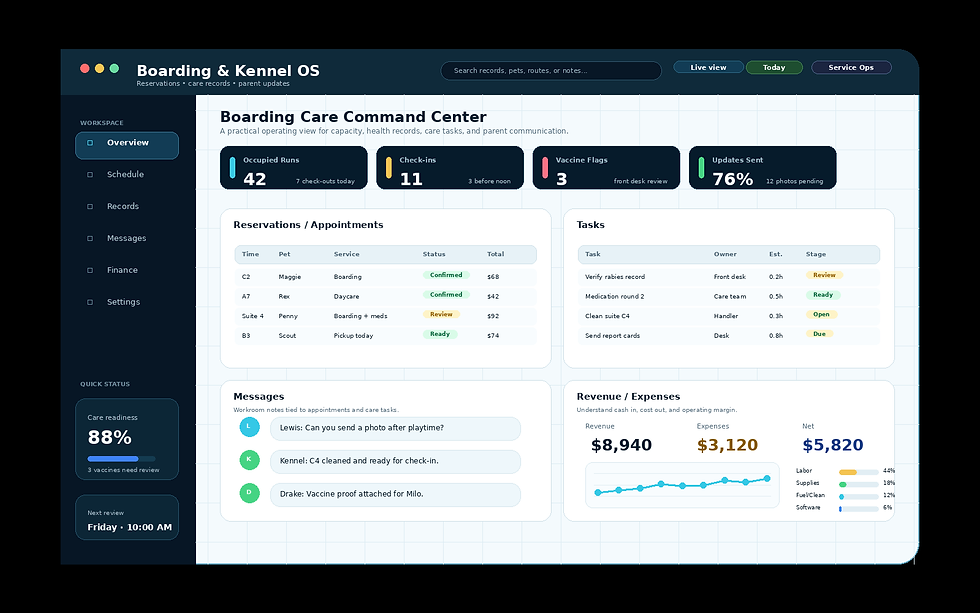
Run Capacity View
Capacity visibility for runs, suites, daycare groups, arrivals, departures, waitlists, cleaning windows, and care restrictions. Managers can see what is available, what is blocked, and what needs front-desk review.

Health & Incident View
A control view for vaccines, medications, illness flags, emergency contacts, run cards, incident logs, owner updates, and inspection-ready records. The goal is cleaner proof and safer care handoffs.

Boarding Revenue View
Occupancy, daycare use, add-ons, deposits, refunds, package revenue, staffing cost, food and cleaning costs, and review activity for boarding owners. The view shows where capacity is earning and where care operations are leaking margin.

Made for Care Teams
Boarding work happens at the front desk, in kennel runs, in playgroups, during feeding rounds, and through parent updates. The system needs to work on phones, tablets, and desktops so staff can record care, managers can see capacity, and owners can protect trust while pets are away.

